
Why clients freeze, what to do in the first ten frames, and how to fix four common problems mid-session.
To direct a nervous client, make the first frames low stakes, give one clear instruction at a time, and keep talking so they never have to guess whether they are doing it right. Clients freeze because they feel watched and do not know what to do with their body. Your job is to give them a task, quick feedback, and permission to be imperfect.
Why do clients freeze in front of the camera?
Clients freeze because they feel judged, they do not know what they are supposed to do, and they believe every frame has to be perfect. A camera turns an ordinary face into a performance, and a non-model has no script for that.
Three needs sit underneath almost every nervous client:
To feel safe. They need to know no one is grading them.
To feel seen. They need specific feedback, not silence while you check settings.
To be allowed to be imperfect. They need to hear that the first frames are expected to be rough.
If you meet those three needs in the first few minutes, most of the stiffness goes away on its own.
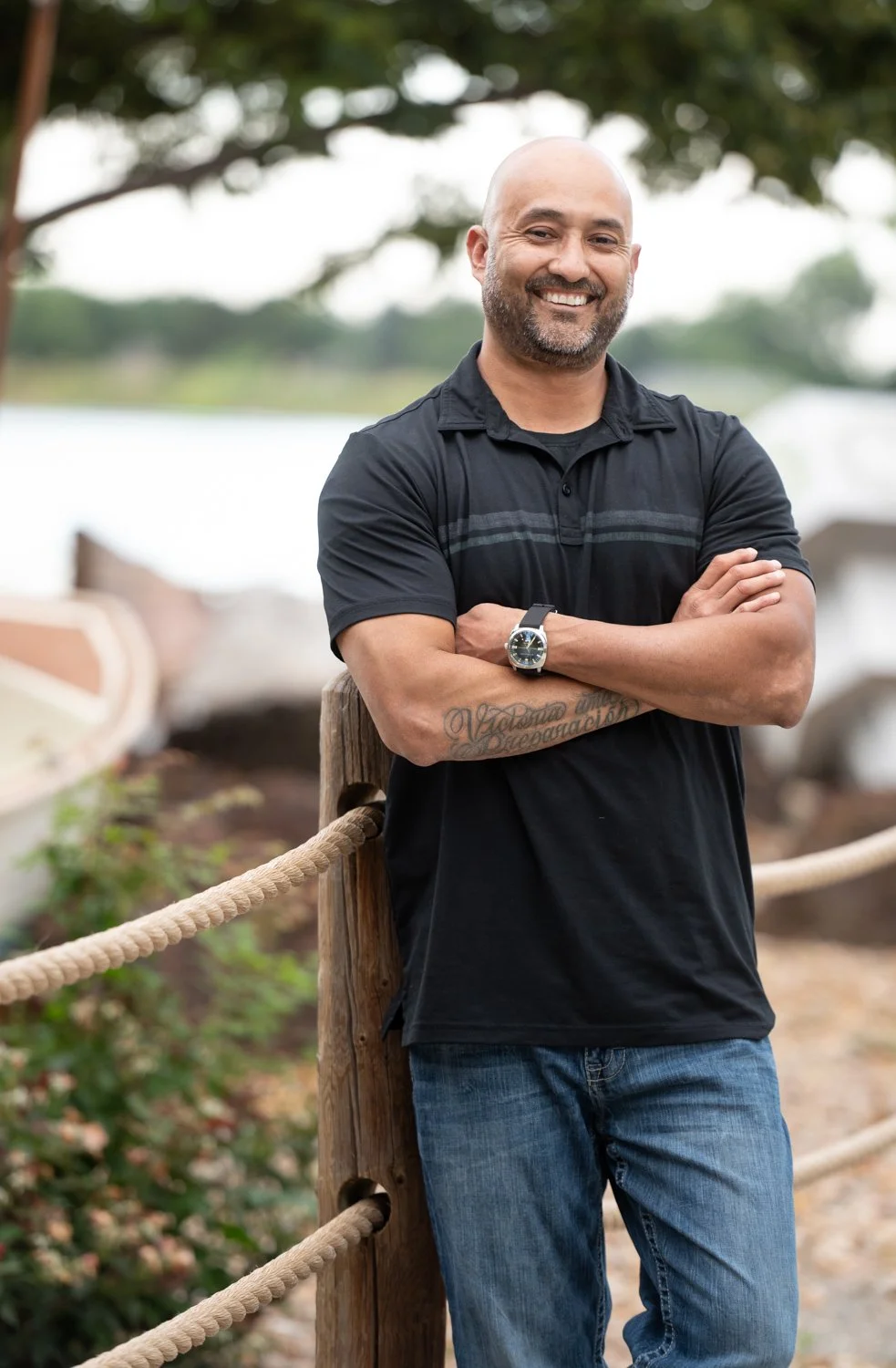
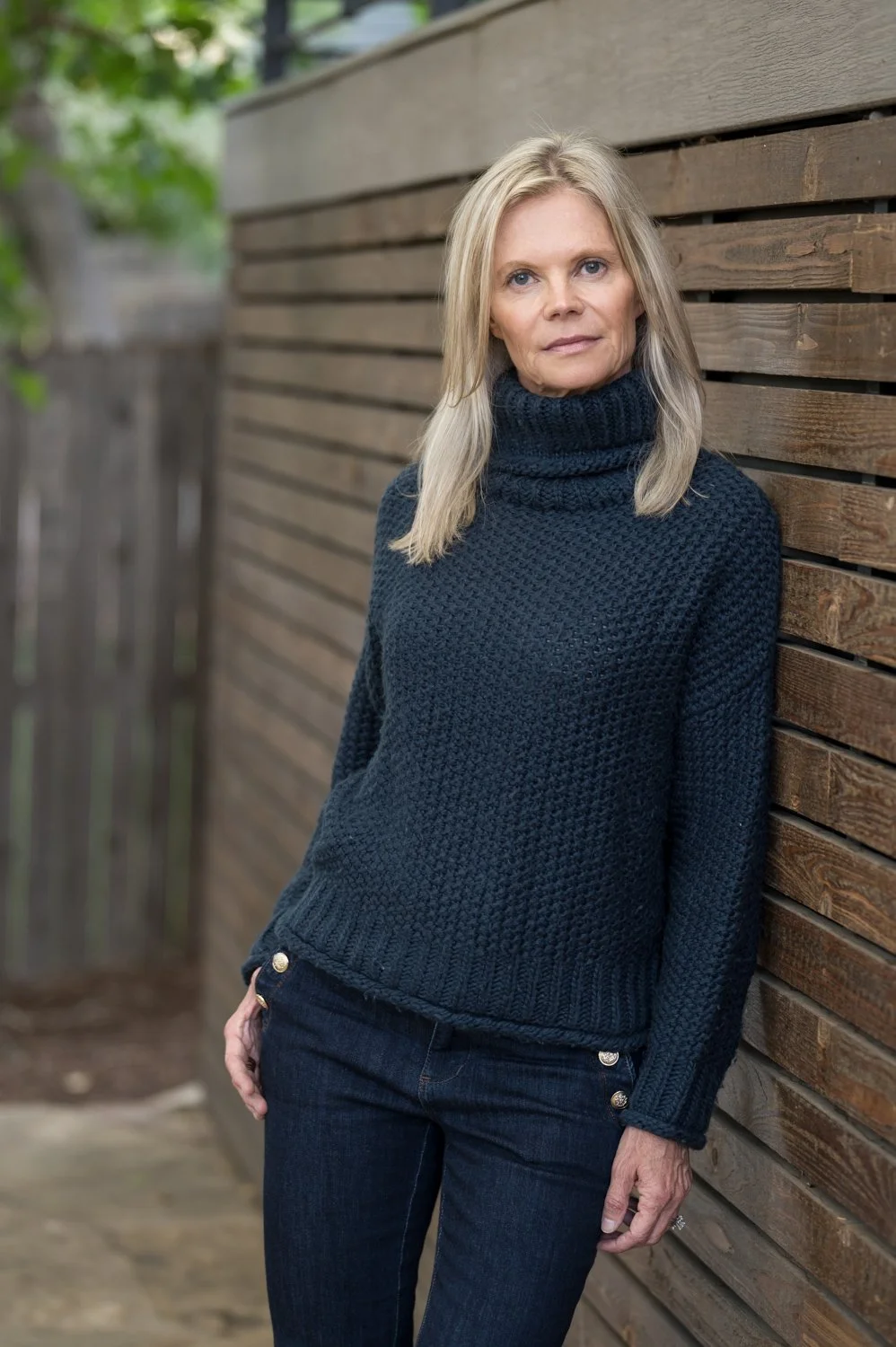


What should you do in the first ten frames of a headshot session?
Treat the first ten frames or so as practice that does not count, and say so out loud. A nervous client relaxes when they learn the early frames are throwaways.
Say it plainly. "We are warming up. These first ones are not the keepers."
Start with movement, not posing. Ask them to shift their weight, roll their shoulders, and exhale before each frame.
Give one instruction at a time. Chin first. Then shoulders. Then eyes. A list of five instructions makes a nervous person freeze harder.
Confirm what works. "That one is good. Hold it." Specific praise tells them what to repeat.
Show one strong frame early. If the client is very anxious, let them see a single good image on the back of the camera once. It builds trust faster than reassurance does.Theatrical vs. Commercial Headshot Differences
I teach my own First 10 Frames warm-up sequence in full inside
What do you say to a client who hates photos of themselves?
Say something specific and kind, then give them a task. Vague reassurance ("you look great!") does not help, because they do not believe it. A task gives their mind somewhere to go.
Swap common directions for ones that work:
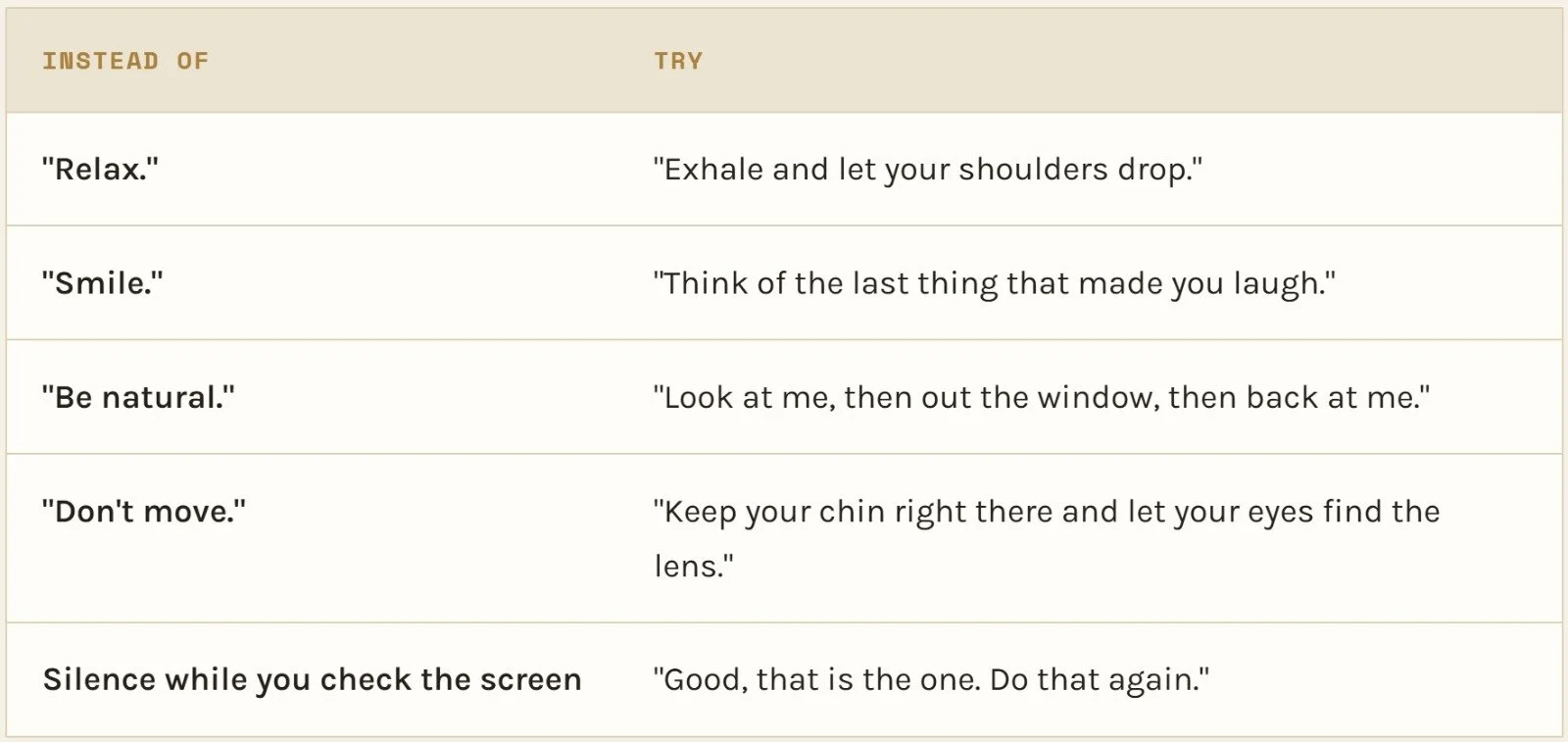
A line that works for the client who says "I never look good in photos": "You are not here to model. You are here to look like yourself on a good day."
How do you work with different types of nervous clients?
Most nervous clients fall into one of four types, and each needs a slightly different fix.
The Frozen client. Stiff, holds their breath, answers in one word.
Fix: Give small physical tasks. Ask them to walk toward you, turn, or shift their weight. Movement breaks the freeze faster than conversation does.
The Over-Poser. Stacks poses they have seen online and pushes their chin forward in every frame.
Fix: Slow them down. Pick one pose, hold it, and return to a neutral stance between frames. Ask them to stop "performing" and just look at you.
The Nervous Talker. Apologizes, jokes constantly, and narrates their own anxiety.
Fix: Let them talk, because talking is how they are coping. Shoot right after a laugh or an exhale, when the face softens. Stay warm and unhurried.
The Self-Critical client. Says "my left side is worse" or "I hate my smile" before you have shot anything.
Fix: Do not argue and do not deny. Acknowledge it, then guide them to the angle that works and skip reviewing every frame. Show only strong ones.
What do you do when a session stalls?
When a session stops working, stop shooting. Lower the camera, change one thing (where they stand, the topic of conversation, or the pace), and restart with a fresh instruction. Pushing through a stalled session produces a gallery of the same stiff frame.
I use a specific reset move for this exact moment, and it is one of the three core pieces taught in Direct & Deliver.


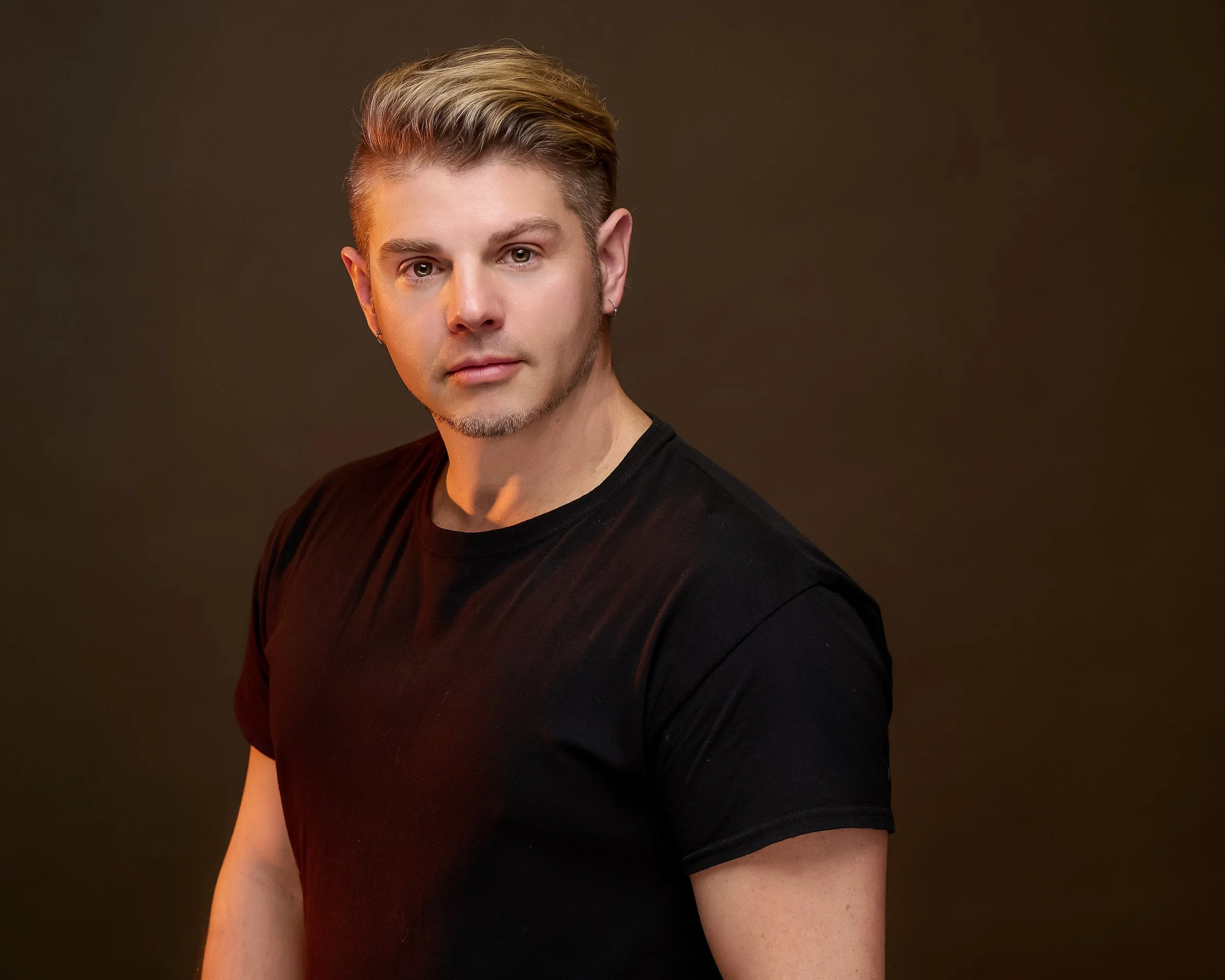
Why does silence ruin a warm-up?
Silence reads as a verdict. When you go quiet to adjust a light or check a screen, a nervous client assumes the pause means the frames are bad. Narrate what you are doing ("checking the light, you are doing great") and keep a steady rhythm of instruction and feedback. Talking through the session is a technique, not small talk.
Does this work for weddings, families, and seniors too?
Yes. The same habits work with any client who is not a trained model: safe, seen, one instruction at a time, and permission to be imperfect. Direct & Deliver is built around "how to get natural, confident results from every headshot, brand, family, or portrait client."
If you shoot weddings and want steady weekday work, read next.
What photographers say about learning with Liv
Liv guided me through headshot photography techniques, editing software and means of attracting new clients. My business has grown & I feel proud of what I can provide my clients now!
— Erika, Portrait & Headshot Photographer, CO
Learning from Liv was an incredible educational and hands-on experience. She provided me with opportunities to shadow, shoot and edit alongside her. The many techniques I refined through her mentorship have greatly improved my career.
— Collin, Portrait Photographer, CA
Frequently asked questions
How do I pose someone who hates being photographed?
Skip the pose and give a task. Ask them to move, exhale, or look somewhere and back at you. A person focused on a task stops watching themselves, and the stiffness fades.
How long should the warm-up take?
Plan on the first ten frames or so as practice. The best frames usually come after the client has settled, so keep shooting past the point where it first feels comfortable.
What if the client is nervous about how they look?
Do not argue with the worry, and do not rush past it. Acknowledge it in one sentence, then move them to the angle and expression that work and show them a strong frame.
What does Direct & Deliver cover?
It is a $67 course on getting natural, confident results from headshot, brand, family, and portrait clients. Topics include why clients freeze, the pre-session workflow, the First 10 Frames warm-up sequence, a direction toolkit, reading the room and adjusting, and the reset move.
What does 1-on-1 mentorship look like?
Mentorship is available as a Half-Day Intensive or a Full-Day Deep Dive, online or in person. Travel costs may apply outside the Colorado Front Range, and payment plans are available. Every path starts with a free 30-minute consultation.
How do I get started?
Start with the free guide, move to Direct & Deliver for the skill, and book a consultation if you want to talk through your business.